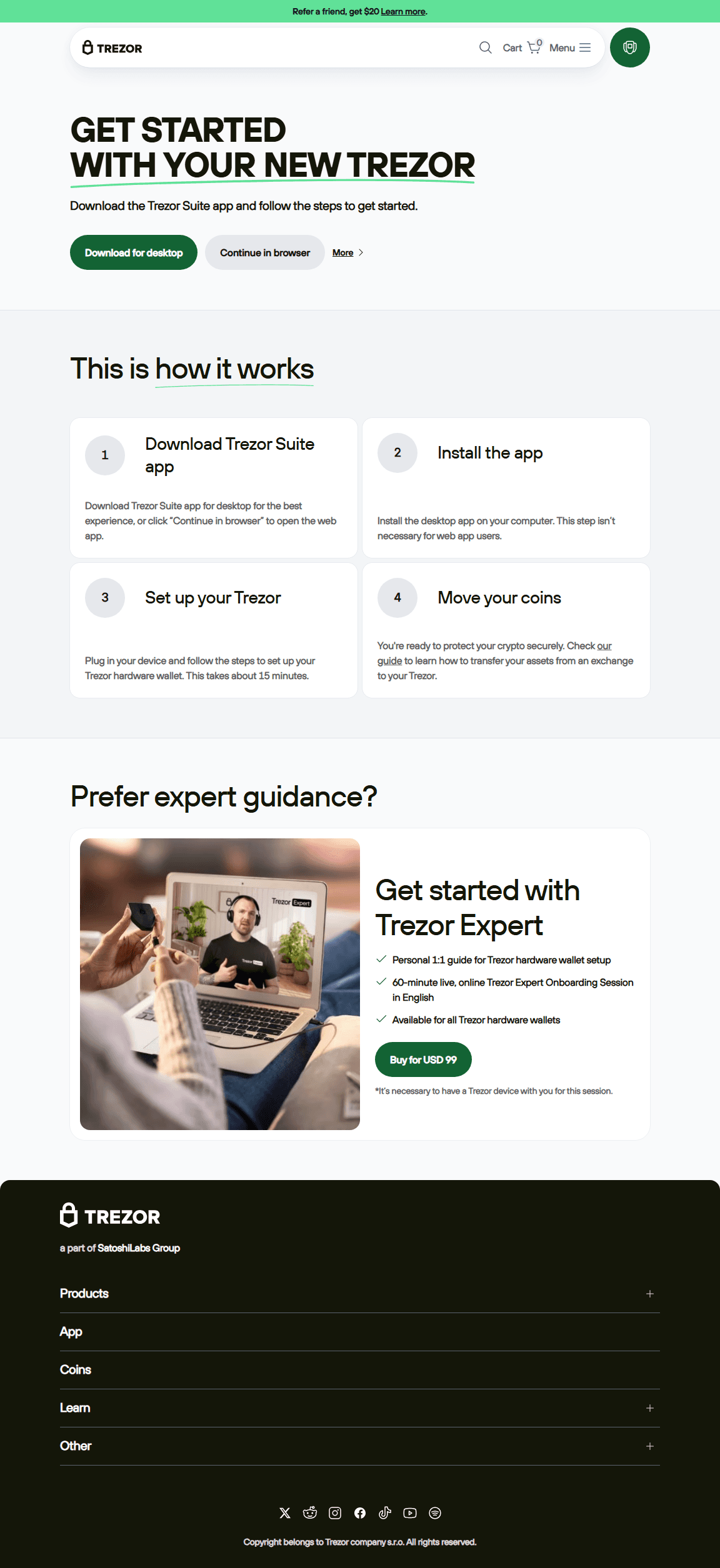
Trezor Login: A Secure Gateway to Managing Your Digital Assets
As cryptocurrency continues to evolve, security remains a top priority for investors at all levels. Hardware wallets like Trezor have become essential tools for safeguarding digital assets, offering protection that far exceeds what software wallets and online exchanges can provide. One of the most important aspects of using a Trezor device is the Trezor login process, which serves as the gateway to accessing your crypto portfolio. This guide provides a detailed overview of how Trezor login works, why it is secure, and how users can make the most of their Trezor experience.
What Does Trezor Login Mean?
Unlike traditional platforms, Trezor does not rely on email addresses, passwords, or online accounts to authenticate users. Instead, the term Trezor login refers to the method of accessing your wallet through Trezor Suite, the official application used to manage your device. The login process is based entirely on physical authentication, meaning your device must be present to gain access.
During the login process, Trezor Suite establishes a secure connection with your hardware wallet. You confirm your identity by entering your device’s PIN and, if enabled, a passphrase. This method ensures that only the physical owner of the device can open and operate the wallet. Since private keys never leave the hardware wallet, your crypto remains protected even if your computer is compromised.
Preparing for Your First Trezor Login
Before you begin logging in, you must properly set up your device. Whether you own a Trezor Model One or Trezor Model T, the setup steps are similar and straightforward.
Install Trezor Suite
Begin by downloading Trezor Suite from the official Trezor website. The application is available on Windows, macOS, Linux, and supports a web version for browsers. Installing the software ensures you have the tools needed to connect to and manage your device.
Connect and Initialize Your Device
Use the provided USB cable to connect your Trezor to your computer. If the device is brand new, Trezor Suite will guide you through the initialization steps, which include:
Setting up a secure PIN
Generating and confirming your recovery seed, a series of words used to restore your wallet
Updating the firmware if needed
Personalizing your device name or settings
Once initialization is complete, your wallet is ready for secure login.
How the Trezor Login Process Works
The Trezor login method is designed to be simple, intuitive, and extremely secure. Here’s how it works from start to finish:
Step 1: Open Trezor Suite
Launch the Trezor Suite desktop app or open the web version in your browser. The software automatically checks for updates to ensure your login experience is safe and reliable.
Step 2: Connect Your Hardware Wallet
Plug in your Trezor device using the USB cable. The Suite will immediately detect your wallet and request authentication.
Step 3: Enter Your PIN
Your PIN is displayed using a secure, randomized keypad on your device. You enter it on your computer by matching the pattern. Because this keypad changes every login, your PIN cannot be intercepted by keyloggers or screen-recording malware.
Step 4: Enter Your Passphrase (Optional)
If you have activated a passphrase, Trezor Suite will prompt you for it after entering your PIN. This passphrase serves as an additional layer of protection and can generate hidden wallets accessible only to those who know it.
Step 5: Access Your Trezor Dashboard
Once authenticated, you will be taken to your dashboard. Here, you can manage multiple assets, review your transaction history, buy and exchange crypto, or adjust device settings.
Why Trezor Login Is Among the Safest Methods in Crypto
Trezor is widely recognized for its security-first approach. The login system incorporates several advanced protective mechanisms, including:
Offline private key storage, ensuring keys never touch the internet
Physical confirmation, meaning all sensitive actions must be approved directly on the device
PIN encryption, which guards against unauthorized access
Passphrase support, offering advanced protection for experienced users
Firmware authenticity checks, preventing tampered software from running
Encrypted communication between the Suite and device
The combination of physical control, offline key storage, and encrypted authentication makes Trezor login one of the most robust wallet access systems available.
Troubleshooting Login Issues
Occasionally, users may encounter difficulties during login. Below are common issues and their solutions:
Device Not Detected
Try switching USB ports or cables, restarting Trezor Suite, or reconnecting the device.Incorrect PIN Attempts
Be sure you are matching the keypad layout correctly. After several incorrect attempts, the device may wipe itself for safety.Passphrase Not Working
Remember, the passphrase must be entered exactly—case-sensitive and space-sensitive.Firmware Errors
Update your firmware through Trezor Suite to restore functionality.Browser Compatibility Problems
If using the web version, ensure WebUSB or Trezor Bridge is installed.
Best Practices for Safe Trezor Logins
To ensure maximum protection while logging in, follow these guidelines:
Store your recovery seed offline and never share it with anyone
Keep your Trezor device and software updated
Avoid using public or unsecured computers
Always verify transaction details on your device screen
Enable a strong passphrase for enhanced protection
Download Trezor Suite exclusively from the official website
Following these practices ensures your crypto remains secure at all times.
Conclusion
The Trezor login process is built around providing security without sacrificing convenience. By combining physical authentication, encrypted communication, and offline key storage, Trezor offers one of the safest ways to access and manage cryptocurrency. Whether you’re new to hardware wallets or an experienced investor, Trezor’s login system offers confidence and peace of mind, allowing you to take full control of your digital assets securely.